

Emergency Relief Grant Program Overview
The Emergency Relief Grant program provides one-time $1,000 grants to support individual craft artists who have experienced an unforeseen, substantially disruptive emergency in the last 90 days. If awarded, funds can be used in any way towards immediate relief and/or recovery efforts. A final grant report is not required in this program. 1099’s are not issued for grants awarded. Individuals who have previously received a relief grant are not eligible to apply.
This program is open to craft artists who make original three-dimensional objects by hand, including folk and traditional artforms, who reside and work in the US, US Territories, Tribal Nations or Indigenous Communities. See “Eligibility” section for more information.
Applications open quarterly based on our fiscal year calendar and are accepted on a rolling basis. Complete applications are reviewed in the order they are received, and awards are made until all available funding for the quarter has been awarded. Incomplete applications will not be considered received until fully executed. Applications are available in both English and Spanish. Applicants can typically expect to receive a response by email within 10–15 business days of submitting a complete application.
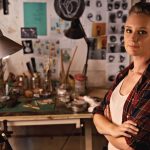
CERF+ supported artist after their home was damaged in a flood.
Program Requirements & Guidelines
Click to expand toggles.
To be eligible for consideration, individuals must meet the following:
- Be an individual craft artist
- Are a minimum age of 18 years or older
- Reside and work in US, US Territories, Tribal Nations or Indigenous Communities for the last two years
- Have a public-facing craft practice
- Have experienced an unforeseen, substantially disruptive emergency in the last 90 days
- Have not previously received an emergency relief grant
- Craft practice does not include hate speech or symbols
CERF+ verifies artists' identification through a third party system called ID Pal to ensure that an individual is who they claim to be by confirming their information against independent, trusted data sources. This process is crucial for preventing fraud, meeting regulatory compliance, and building trust in digital transactions.
Applications are not considered complete until the ID verification has been submitted. If you run into any challenges, please email [email protected]
While we acknowledge that there are varying ways that organizations, collectives and artists define, endorse, or acknowledge craft in various ways, for the purpose of this grant program, we define a craft artist as:
An individual who makes original three-dimensional visual art objects by hand. Applicants must create the majority of their artworks themselves, though they can incorporate store-bought elements. The object-making must be the primary, meaningful and/or substantive part of your current artistic practice. We look for objects in which the artist transformed the materials into something new. Visual craft objects can be functional or nonfunctional.
Examples of eligible mediums and materials include:
- Basketry
- Beadwork
- Book Art
- Bones
- Ceramic
- Concrete
- Fiber
- Furniture
- Glass
- Gourds
- Jewelry
- Leather
- Media
- Metal
- Mixed
- Mosaic
- Paper
- Plastic
- Recycled Materials
- Sculpture
- Shells
- Wearable
- Wood
- Textiles
- Jewelry: Includes wearable items that are primarily handmade from scratch or using primarily raw materials. Beadwork: Includes bead stringing, bead weaving, bead looming, bead embroidery, and wire wrapping with beads. This would also include using beads to create jewelry, weavings, and as surface decoration on clothing, sculptures, masks, and other three-dimensional objects.
Musical Instruments/Puppet Making: Performing artists who also make musical instruments or puppets may be eligible if making these objects is a primary part of their practice, and those objects meet CERF+’s other criteria for craft objects.
Fashion/Clothing: Garments of original design that are handmade by the designer or their immediate, local family or circle are often eligible. Clothing-making that involves a great deal of hand embellishment, hand-weaving, unusual cuts, or that preserves a specific cultural tradition tied to cultural bearers typically falls into this category.
Printmaking: We have supported artists who primarily work in handmade printmaking techniques including relief processes (such as woodcut and linoleum blocks), intaglio (etching, engraving, drypoint, aquatint, and mezzotint), and traditional lithography (such as using a stone, metal plate, or polymer plate that is hand-inked for printing). In certain cases, silk screening may also be considered an eligible art form, provided documentation shows the handwork involved in the making process.
Multi-disciplinary or Mixed mediums: We recognize that artists may have multiple artistic practices and often move in various spaces and work with different mediums. To be eligible for support, we look for craft object-making to be a primary, meaningful and/or substantive part of your current practice.
Shared Practices: For artists that work in a shared practice, such as a collective or a partnership, we will consider your practice as eligible if the overall work is focused in a craft medium as described above. Please explain your individual role in the shared practice and highlight objects that especially exhibit your part of the work in your application. If your shared artistic practice experienced an emergency, please submit one application per craft artist.
Our program looks for active and recent engagement or participation in the craft community and/or in the local community. This can include participating in or hosting/leading exhibitions, public cultural events, fairs, or craft shows but can also be:
- Articles, interviews, reviews, or features about the artist in written, video, or audio journalism
- Craft show or gallery representation of the artist on a website, brochure, or catalog
- Participating in an organization, group, shared studio, or residency
- Publications about the artist
- Recognition, awards, and honors
- Online presence
- Your own artistic website
- Being featured on another professional website such as a museum shop
- Social media presence that focuses on your art work, making or practice
- E-commerce
- Analog or Digital Documentation
- Articles or journalism about you and your work
- Brochures, Fliers, Posters, or other Documents from artistic and cultural events
For the purposes of this document and readability, we will use emergency consistently, but understand that disaster relief is governed by the same guidelines.
We define an eligible emergency as an event or circumstance that is unforeseeable, unexpected, outside your control and has a recent and substantially disruptive effect on the applicant’s craft practice/livelihood.
Examples of eligible emergency events include:
- Fires
- Floods
- Hurricanes
- Earthquakes
- Tornadoes
- Acts of nature
- Theft
- Accidents
- Injuries
- Major illness
- Mental health event
- Primary caregiver for a sick person.
The examples are not exhaustive but represent the most commonly supported scenarios by the program. Emergencies vary based on an individual’s circumstances. If you are a craft artist and you do not see your emergency above, you are welcome to reach out to [email protected] and ask questions.
To apply for a Get Ready Grant, select the “Apply Now” button on this page and follow the directions to complete the online application and upload the required supporting documentation.
Incomplete applications will not be considered. If you have any questions or encounter any technical issues please contact [email protected].
Additional Information
Applications are evaluated on a case by case basis. We do not guarantee any applicant a grant. CERF+ considers how the event affected the applicant's life and the nature of the event.
The Determination Process involves:
- CERF+ Staff reviews the application to ensure it meets the eligibility standards outlined and determines if the application will be approved or declined.
- Staff may request additional information for clarity of the application
- Staff may consult with the Grants Committee for additional consideration and review before making a final determination.
- Applicants are notified of the outcome via email provided in the application
- Incomplete applications will not be considered and are automatically denied.
- Determinations are typically provided within 10-15 business days, however notification timing varies depending on the volume of applications, correspondence for follow up questions, and the time needed to complete the determination process.
CERF+ regularly reviews guidelines, eligibility and grant award amounts. If you have received help from CERF+ in the past, be aware that the process and grant amount may have changed since that time. Prior funding does not guarantee eligibility for current programs. We are happy to discuss how recent changes may affect your application.
- Two-Dimensional Art:
- Painting, poured paintings, and spray paint art
- Monoprints and monotypes
- Canotype printmaking
- Photography
- Drawing, illustration, and graphic design
- Collage
- Video and digital media
- Digital printmaking
- Illustration including comic strips, graphic novels, and comic book art
- Tattoos
- Jewelry that is primarily assembled from parts that are factory-made or made by third parties with no significant hand alteration and transformation of the items.
- Performing arts practices such as dance, music, and theater.
- Set design, sound design, lighting design, costume design and related building elements.
- Literary arts practices such as fiction/nonfiction, journalism, poetry, screenwriting, playwriting, storytelling, biographies, copywriting, blogging, and academic writing.
- Consumable Items: Food, beverages, soap, candles, oils/essences, flower arrangements, makeup, hairstyling, and nails.
- Objects made from plans, kits and patterns that are manufactured or designed by someone other than the maker.
- Objects made from manufactured or purchased molds and casts.
- Art that is factory-made or made by third parties without significant hand alteration and transformation of the items.
- Clothing design: garments that are factory-made or made by third parties or that are only slightly altered with no handiwork such as embroidery, applique, or beadwork.
- Clothing that is designed by the applicant, but constructed by contractors
- Premade T-shirts or other garments that have been silkscreened or embellished with downloaded or iron-on designs
- Artificial flower arrangements and wreaths that are assembled from store-bought elements.
- Downloaded Visual Art Forms designed by someone other than the applicant such as:
- 3D printing with downloaded models
- Fuse bead/meltable bead art with downloaded patterns such as Perler, Melty, and Hama beads
- Computer-controlled plotting machines such as Cricut and Glowforge with downloaded designs
- Repair, conservation, or restoration of antiques, furniture, cars, or art objects.
- Taxidermy
- Architecture or Home Renovation
- Picture Framing or Canvas Stretching
- Art making projects or related expenses of any kind
- Loss or lack of employment
- Slow business
- Low sales
- Poor marketplace/festival/fair turnout
- General indebtedness
- Routine/ordinary dental work
- Routine/ordinary medical problems
- Routine/ordinary car maintenance or repairs
- Remodeling/capital improvements
- Immigration and visa fees
- Ongoing mental health struggles including depression & anxiety
- Recurring/ongoing emergencies
We acknowledge that there are many difficulties that may arise in a person’s life. These situations may be very distressing and challenging. As our process evolves and new circumstances arise, we acknowledge that this list is not comprehensive and is updated annually.
Because we do not guarantee approval of every application, decisions not to approve a grant application will include ineligibility according to the guidelines listed above. We do our best to provide you with information about additional resources that might be better suited to your circumstances.
However, there are circumstances when reconsideration may be necessary. You are welcome to submit an appeal within 30 days of receiving the grant decision if you feel that your application was eligible for support. We do not consider appeals if you are simply dissatisfied with the outcome of your application or if the submitted application was incomplete.
The Process:
- Email CERF+ Grants and Programs Staff requesting an appeal.
- Include additional information related to your application that would be helpful to support your appeal.
- CERF+ Grants and Programs Staff will re-review your application and may ask for additional documentation. Staff will consult the Executive Director and Grants Committee for additional review and guidance.
- CERF+ Grants and Programs Staff will notify you with the outcome of your appeal.
- Outcome notification timing varies depending on the volume of applications, correspondence for follow up questions, and the time needed to complete the determination process.
All appealed decisions will be final.
Once awarded, grant agreements must be signed and fully executed within 90 days. Failure to do so may result in the termination of your grant award.
Termination of a grant award does not prohibit individuals from reapplying again in the future.
Questions?
Check the FAQs below to see if your question may have already been answered. If you have additional questions, please email us at [email protected]
Frequently Asked Questions
Click to expand toggles.
You can reset your password using this link. Also, we highly recommend writing down your password as not all devices save passwords in a way that works well with our grants system.
If a reset doesn’t work, email [email protected].
No. Emergency Relief Grants from CERF+ are considered non-taxable grants/gifts. The IRS does not require us to provide a Form 1099. We recommend that grant recipients consult with an accountant to ensure you are compliant in reporting taxable income.
No, your income can come from any source. However, we do look for active and recent engagement or participation in the craft community / a public-facing artistic practice as mentioned above.
There is no specific deadline to apply for our Emergency Relief Grant. However, CERF+ will not provide funding if too much time has passed since the event that caused the emergency.
Funds are allocated for the program on a quarterly basis and applications are awarded on a first come first served basis.
If available funds are depleted, applications will close temporarily and reopen the next quarter when additional funds are available.
Applicants can typically expect to receive a response by email within 10–15 business days of submitting a complete application.
Common reasons for declined applications include an ineligible artistic practice, no recent public-facing artistic activity, an ineligible emergency, or combinations of these.
Applications are evaluated on a case by case basis. We do not guarantee any applicant a grant.
To request additional information about the denial of your application, please email [email protected].
No, the grant can be used in any way towards immediate relief and/or recovery efforts.
If you previously applied but were not awarded a grant, you are eligible to reapply.
If you were previously awarded a Emergency Relief grant you are not eligible to reapply.
Yes, you can still apply for the Get Ready Grant or other CERF+ grants that may be available.
Grantees

Kazuki Takizawa
Glass ArtistA very good friend of mine received emergency funding from CERF+ several years ago when a neighbor’s booth set up at a craft show has…
Red Weldon Sandlin
CeramicistWe never think we will be the ones that may have to ask for help when an unfortunate accident happens that takes us out of…

Carol Keiser
Studio ArtistI am forever grateful that CERF+ was there for me when I needed them with a quick and easy loan that helped me get through…